Choosing among the Top 10 Intermittent Label Printers requires more than reading the highest meters-per-minute figure. In real production, speed can change with label pitch, material thickness, print resolution, ink coverage, and drying time. A printer running glossy synthetic labels may slow down when dense barcodes or solid colors demand sharper output. Small details matter.
Speed is not everything.
This guide examines what is the max speed of an intermittent label printing machine without losing quality, using practical performance factors rather than marketing claims alone. We consider manufacturer specifications, print consistency, registration accuracy, barcode readability, setup time, and maintenance requirements. Where possible, comparisons should include the same artwork, substrate, and operating conditions. Otherwise, the results may look impressive but remain difficult to trust.
The evaluation also reflects production experience. A fast machine is valuable when it maintains clean edges across a long roll, prevents banding, and preserves readable text at inspection distance. Operators will notice wasted labels, frequent adjustments, and curing problems before a sales brochure does. Not always.
Some specifications remain difficult to compare directly, especially when brands use different testing methods. That limitation deserves attention. Our rankings therefore treat maximum speed as one performance indicator, not a final verdict. Reliable label printing depends on the balance between throughput, image quality, material compatibility, and repeatable daily operation. The best choice may not be the fastest model, but the one that keeps quality stable during demanding production runs.
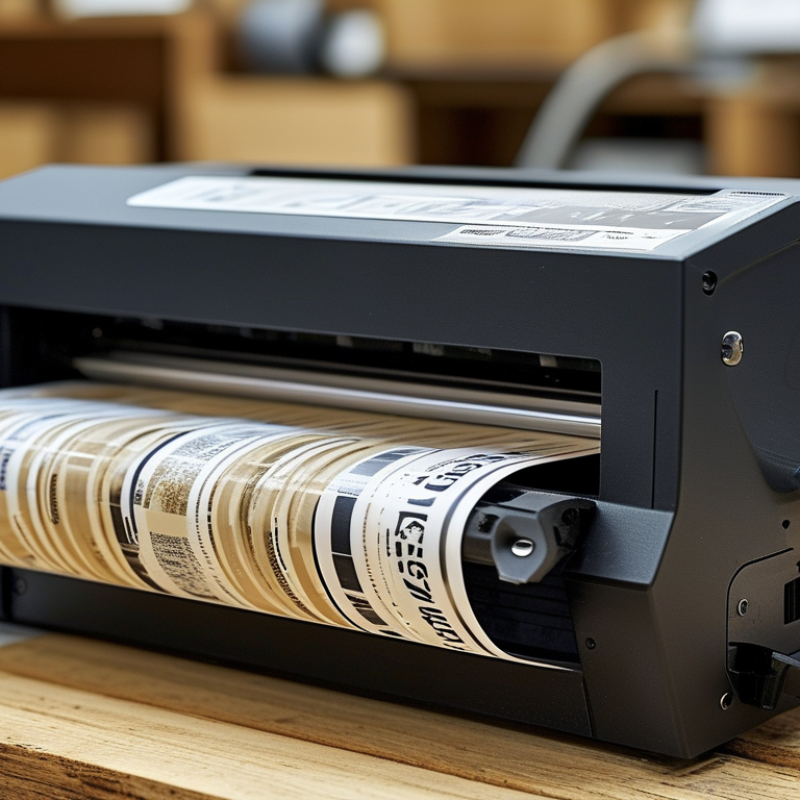
Intermittent label printers create one label at a time, then pause before printing the next. This stop-and-start cycle separates them from continuous-feed systems. The printer advances the material, positions the label, prints the image, and waits for the next signal. A sensor detects gaps, notches, or black marks. Accurate detection prevents text from drifting across the label.
These printers support cartons, shipping labels, product tags, and warehouse identification. They suit jobs with changing data, barcodes, dates, or batch numbers. In practical evaluations, maximum speed matters less than stable registration. A printer rated for high output may lose clarity when darkness, label stock, or print width changes. Test it with the actual material.
Print quality depends on several linked settings. Thermal energy must match the coating and ribbon, while printhead pressure should remain even. Dust can create thin barcode lines. Poor alignment can turn a readable label into a scanning problem. Keep the printhead clean. Small details matter.
When comparing ten intermittent label printers, measure usable speed, pause recovery, barcode verification, and waste during setup. A reliable machine should restart without shifting the image. It should also handle frequent format changes without complicated adjustments. Real production rarely matches brochure figures. I would question any result measured only on ideal stock. An honest test includes curled labels, changing data, and operator mistakes. That is where dependable performance becomes visible.
Choosing among the top 10 intermittent label printers requires more than reading the maximum speed. Manufacturers often quote peak output under ideal conditions. Your real result depends on label length, print density, pauses, and operator handling. Measure completed labels per minute during a normal shift. A printer that produces 150 labels quickly may lose time during frequent gaps. Intermittent printing means each label stops at the print point, so acceleration and recovery matter.
Resolution affects edge clarity, small text, and barcode reliability. Higher dpi is not automatically better. It may increase processing time and expose poor material choices. Accuracy deserves a physical test. Print a batch, then compare the first, middle, and final labels.
Check registration across a logo, barcode, and cut line. Even a small shift can cause scanning failures or waste. Use verified measurement tools, not eyesight alone.
Tips: Test the exact media, adhesive, liner, and ribbon used in production. Include narrow labels, long labels, coated stock, and textured surfaces. Record speed, rejected labels, setup time, and temperature changes. Ask for sample files and repeatable test conditions. If results look perfect once, remain skeptical. Your workflow may punish a printer that wins on paper. Media compatibility can also change with humidity, storage age, and label tension.
Intermittent-motion label printers are judged by more than maximum speed. A practical top-ten shortlist should compare print quality, registration control, downtime, and application fit. The strongest choices include compact thermal units for warehouses, high-resolution models for cosmetics, color systems for short-run food labels, and robust presses for chemical packaging. Other useful categories include tamper-evident printing, variable-data work, recycled substrates, narrow-web films, pharmaceutical identification, and on-demand seasonal labels. Each application demands different media handling.
Smithers’ The Future of Digital Print for Packaging to 2028 reports continued growth in digital packaging output, driven by shorter runs and version changes. That trend supports intermittent systems, which reduce setup waste during frequent artwork changes. AWA Alexander Watson Associates also identifies pressure-sensitive labels as a major packaging format, increasing demand for accurate registration and reliable adhesive-substrate control. In practice, I would test a printer at its rated speed, then repeat the test with small text, dense barcodes, and uneven stock. Ratings can look impressive.
Performance data should include sustained output, not a brief peak. A 300 dpi engine may outperform a faster model when barcodes remain readable at 2-millimeter height. PMMI’s packaging automation research highlights labor efficiency and flexible production as continuing investment priorities. Therefore, the best printer depends on the workplace: a warehouse values uptime, while a premium label room may prioritize color consistency and inspection. Some machines still struggle with reflective films. That detail deserves more attention.
Choosing among the top ten intermittent label printers requires more than comparing maximum speed. In production, a stable 150 labels per minute may outperform a higher advertised figure. Test actual stock, including coated paper, synthetic film, and narrow labels. Inspect print density at small fonts and barcodes. A sharp edge matters. Operators should check registration accuracy, sensor response, cutter options, and connection stability. Thermal transfer models need ribbon control, while direct thermal units simplify loading but may fade under heat or light.
Maintenance costs often appear after installation. Ask how quickly printheads, rollers, sensors, and cutters can be cleaned or replaced. A removable printhead and tool-free platen access can reduce downtime during a busy shift. Keep spare consumables on site. Dust is expensive. Daily cleaning may protect print quality, but excessive pressure can damage sensitive components. I would record stoppages, rejected labels, and cleaning time for several weeks before judging reliability. That evidence is more useful than a brochure rating.
Total ownership includes electricity, ribbons, labels, software, training, service visits, and operator time. A lower purchase price can become costly if calibration is frequent or replacement parts are difficult to source. Consider warranty coverage, local technical support, firmware updates, and realistic workload limits. Do not test only in a quiet showroom. Run the printer at peak-shift temperature, using real artwork and batch sizes. One weakness remains easy to miss: quieter mechanisms may sacrifice service access. I would accept slightly lower speed for consistent output and simpler maintenance.
Choosing among the top 10 intermittent label printers requires more than comparing maximum speed. Production conditions decide whether speed becomes real output or wasted motion. Smithers’ 2024 analysis forecasts the global printed labels market to exceed 50 billion dollars by 2028, increasing pressure for flexible, reliable equipment. A high-speed printer suits large warehouses, but a compact unit may perform better in a food-processing room with frequent roll changes.
Match the printer to the environment. For short batches, prioritize quick setup, accurate registration, and simple changeovers. For continuous production, examine sustained throughput, printhead life, and thermal management. I recommend testing the printer with your actual labels, adhesive stock, and smallest barcode. Brochures can mislead.
Quality matters most at the scanning point. GS1 guidance emphasizes consistent barcode structure and verification, while ISO/IEC 15416 evaluates printed barcode quality through grades such as contrast, modulation, and defects. Ask suppliers for measured results, not attractive samples. In my experience, a printer rated at 300 millimeters per second may run slower after dust, humidity, or frequent pauses appear. That is normal.
Do not ignore maintenance access. PMMI industry research continues to identify labor availability and uptime as major automation concerns. A printer needing specialist service can become expensive during a night shift. The best selection balances speed, resolution, media tolerance, operator skill, and verified uptime.
Fast is useful. Stable is better.
: Compare sustained output, registration accuracy, barcode clarity, downtime, and media compatibility. Peak speed can mislead.
Choose quick setup, simple roll changes, and accurate registration. Short batches benefit from reduced setup waste.
Prioritize uptime, readable barcodes, stable connections, and easy loading. A steady 150 labels per minute may be enough.
Test small text, dense barcodes, coated paper, synthetic film, and narrow labels. Use real artwork, not attractive samples.
Check whether printheads, rollers, sensors, and cutters are easy to clean or replace. Keep spare consumables nearby. Dust is expensive.
Direct thermal printing simplifies loading but may fade with heat or light. Thermal transfer printing requires controlled ribbon handling.
Include electricity, ribbons, labels, software, training, service visits, and operator time. A cheaper machine may become expensive later.
Measure contrast, modulation, defects, and scanning consistency. A barcode that looks sharp may still fail verification.
No. Stable output is often more valuable than impressive peak speed. I would accept slightly lower speed for easier maintenance.
Testing may expose poor reflective-film handling, slow recovery after pauses, or difficult service access. Some weaknesses stay hidden.
Intermittent label printers are designed to produce labels in controlled cycles, making them suitable for packaging, product identification, logistics, and other production environments that require precise, repeatable output. This guide explains their operating principles and compares essential factors such as print speed, resolution, registration accuracy, media compatibility, and production stability. It also considers what is the max speed of an intermittent label printing machine without losing quality, emphasizing that the practical limit depends on print technology, label material, image complexity, drying conditions, and maintenance quality.
The top 10 printers are evaluated by performance, flexibility, and suitability for different workloads, from small-batch operations to continuous industrial production. Readers will also learn how printheads, sensors, software controls, and media-handling systems affect daily reliability, along with the maintenance tasks and ownership costs that influence long-term value. By balancing output requirements, label specifications, operating conditions, service needs, and budget, businesses can select a dependable intermittent label printer that delivers consistent quality without unnecessary expense.
Moveco Machine